

How a Remote Collaboration Built One of the Year’s Most Cinematic Rock Albums: VOL II KURATA
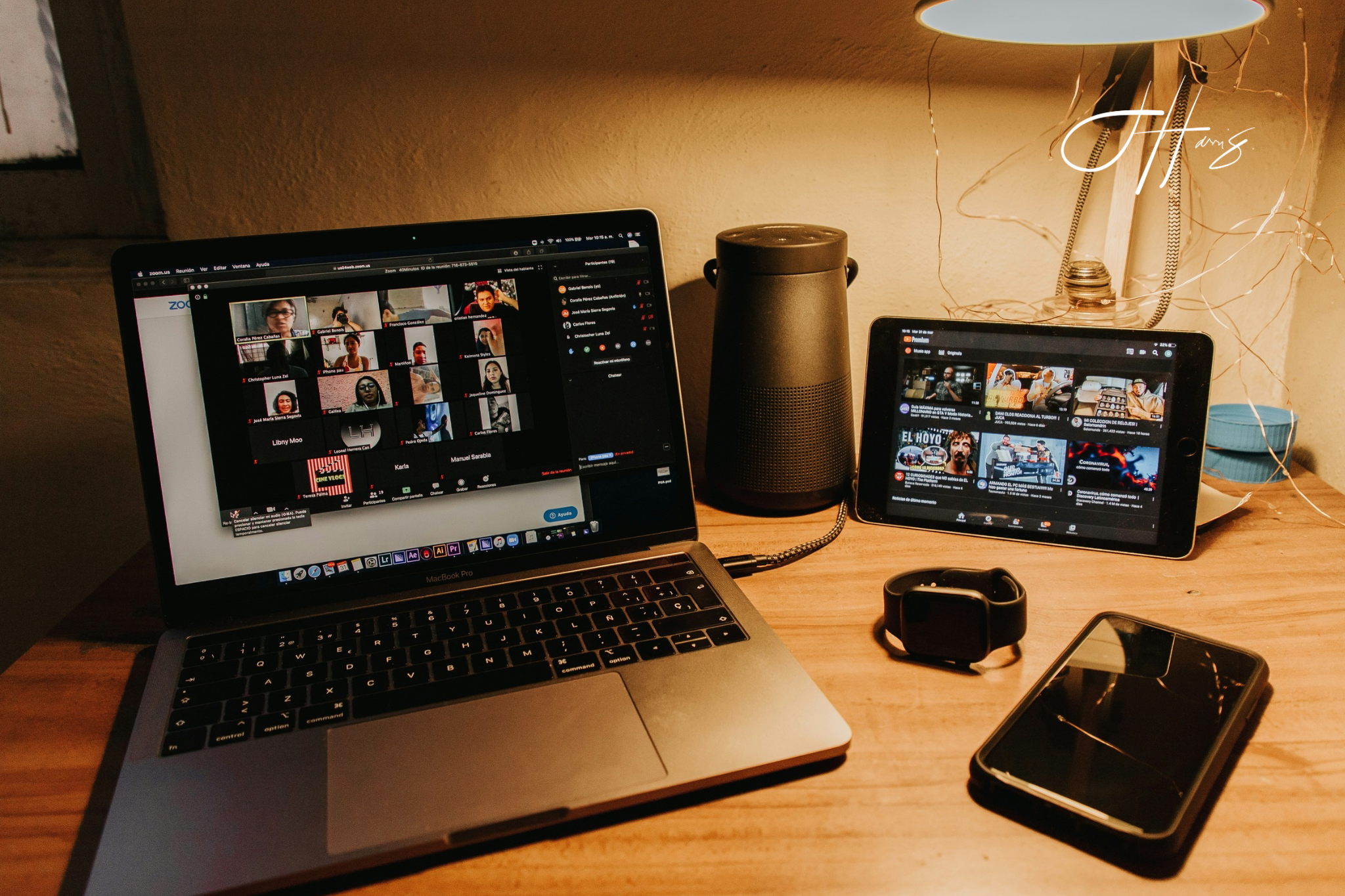
Remote collaboration stopped being a novelty the moment the world went into lockdown. Film studios finished major titles over Zoom. Producers learned how to stream full‑quality mixes over shaky home internet. Even parts of larger productions’ workflow leaned on video calls and distributed teams during the pandemic, proving that high‑stakes, big-budget work could be steered through a laptop webcam without falling apart.
VOL II: KURATA sits in that lineage, but pointed straight at cinematic pop rock. Built as a three‑act album by guitarist‑composer James Harris and lyricist‑co‑composer Pat Villaceran for the Hinabi Privé universe, it’s a case study in how two people in different cities can use modern tools — Logic Pro, Pro Tools/Avid, notation software like Sibelius, cloud drives, and video platforms — to build a coherent, emotionally dense record without sharing a room.
Below is a technical breakdown of how that kind of record actually comes together.
1. Two DAWs, Two Lanes: Choosing the Core Production Stack
At the heart of VOL II: KURATA is a dual‑DAW workflow familiar to a lot of remote producers:
James’s lane
Main DAW: often Logic Pro or similar production‑oriented DAW for guitar, synths, drums, and mix work. Logic’s flexible bussing, built‑in amp sims, and MIDI tools make it ideal for building the cinematic rock textures that define the album’s backbone.production-expert+1
Role: create harmonic beds, rhythm structures, sound design, and the overall sonic architecture of each track.
Pat’s lane
Writing & pre‑production tools:
AVID / Pro Tools style DAW for vocal tracking, comping, and detailed editing.
Sibelius or similar notation software for scoring out string ideas (violin lines, voicings) and ensuring that the more orchestral touches can be performed and re‑used consistently across songs.
Role: lyric writing, melody creation, structural decisions (where verses, bridges, and arcs live), and initial arrangement passes informed by the Hinabi story logic.
This separation of tools mirrors their creative lanes. Each DAW session becomes a “module” in a broader system: Harris’s sessions define the sound-world; Villaceran’s sessions define the narrative and melodic skeleton. The hand‑off between them is mostly via stems and consolidated session exports, not shared live sessions, which keeps responsibilities clean and reduces version drift.
2. The Stem-First Workflow: Building from Sound into Story
The production engine starts with stems, not topline.
Sound design and harmonic templates
Harris creates initial session files: drum grooves, bass foundations, guitar progressions, and early synth/piano atmospheres.
These exports are bounced as stems at consistent bit depth and sample rate so Villaceran can drag them into her writing DAW without translation headaches.
Lyric and melody system on top
Villaceran writes with those stems as context, not as background noise. Lyric ideas are drafted in text docs, then tested in DAW with rough melodies over two‑track bounces.
Melody writing is treated as “system design” rather than freestyle: each line has to sit on top of preexisting harmonic motion and leave enough spectral room for the guitars and strings that will arrive later.
Back to the mix architect
Once a demo vocal and structural map exist, the project — or consolidated stems and MIDI — returns to Harris for full‑scale arrangement.
This is where instrumentation decisions firm up: which guitar layers stay, where violin or cello are introduced, how drums evolve across sections, what cinematic flourishes (impacts, reverses, risers) are used.
It’s a workflow closer to film scoring than band jamming. Harmony and mood arrive first as “picture”; story and dialogue are written to that picture; the whole thing is then rebuilt to work as one.
3. Version Control, Not Chaos: Cloud Drives, Waveform Review, and Avid Collaboration
With no shared studio, file management becomes part of production.
Cloud storage
Projects and stems live in a structured cloud environment (e.g., Google Drive, Dropbox, or a specialised platform like Pibox or Avid Cloud Collaboration) with clear folder hierarchies per song and per version.
Naming conventions typically include date/time and stage (e.g., DRAMA_230104_JH_stems_v3, DRAMA_230115_PV_vocaldemo_v2), which lets both collaborators track evolution over months of work.
Waveform review tools
Platforms like Pibox Music and similar tools allow uploading of mixes with in‑waveform comments and revision markers.
Instead of long email threads, Harris and Villaceran can pin precise notes — “mute this guitar swell at 2:13,” “string line enters too early in bar 57,” “lyric double at 3:02” — directly to the audio timeline.
Avid Cloud Collaboration / Pro Tools projects
For Pro Tools‑based work, Avid Cloud Collaboration lets multiple contributors interact with the same project in the cloud, with built‑in chat and change tracking.
This is particularly effective for vocal editing, timing tweaks, and late‑stage mix notes, where round‑trip exporting would otherwise slow everything down.
In practice, that means every song on VOL II: KURATA exists as a trail of decisions: project revisions, mix passes, vocal comps, and string drafts, all mapped across shared folders rather than scribbles on a studio whiteboard.
4. Replacing the Control Room with Zoom: Real-Time Sessions Across Distance
Not everything can be done asynchronously. Some decisions benefit from a virtual “in the room” feel.
Zoom and similar platforms as virtual control rooms
Video calls provide the talkback channel. One side screenshares their DAW (Logic Pro, Pro Tools, or others), while routing high‑quality stereo audio into the call using aggregate devices or virtual drivers like BlackHole or Loopback.
This allows real‑time playback of mixes while both parties can speak over the audio — not unlike a traditional control room session, minus the shared air and latency-free monitoring.
Latency as accepted constraint
Live, in‑sync playing together isn’t realistic over standard video platforms due to network delay. Instead, these sessions serve as review and decision meetings: listening down, marking changes, agreeing on structural edits, or trying out mutes and rearrangements on the fly.
The key is headphones on both sides to avoid feedback loops and ensuring that the DAW audio, not the room mic, is what Zoom is hearing.
This is not unorthodox. During the pandemic, major projects relied on Zoom, bespoke streaming links, and remote approval workflows to continue recording, scoring, and mixing with distributed teams. Remote studio sessions, from orchestral overdubs to drum tracking, became standard operating procedure rather than exception.
KURATA simply applies those same techniques to a smaller, tightly held creative team, rather than a hundred‑person film crew.
5. Composition Tools: From DAW MIDI to Sibelius Scoring
The “cinematic” in KURATA isn’t just an adjective. It’s baked into the composition tools.
MIDI‑first string and synth work
Initial string ideas (particularly violin lines that have become part of the Hinabi sonic signature) start as MIDI inside the main DAW. This lets the team audition voicings, countermelodies, and dynamic curves quickly.
Sample libraries are chosen for a hybrid role: good enough to stand on the record if needed, but close enough to real articulation that they can be translated into live parts later.
Export to notation (Sibelius, Dorico, etc.)
Once lines are stable, MIDI is exported to notation software like Sibelius, where phrasing, bowing, and dynamics are cleaned up and standardised.
This matters not just for future live performance but for internal consistency. The same motif can reappear in another track’s third act without guesswork about intervals or phrasing.
Harmonic mapping across ARCS
Because VOL II: KURATA is designed as a three‑act album aligned with Hinabi’s ARCS — quiet beginnings, breaking and becoming, cautious rediscovery — recurring harmonic colours are tracked.
Certain chord extensions, modal shifts, or voicings become “Act I language,” others “Act II,” etc., so that the emotional shift is also a harmonic shift, not just a lyrical one.
From a producer’s perspective, this means the album’s cinematic feel doesn’t rely on simple “add strings here” gestures. It’s underpinned by deliberate harmonic and orchestration choices that can be recalled and manipulated like reusable components.
6. Drums, Guitars, and Translation to the Stage
One of the overlooked technical challenges of remote cinematic rock is making sure the sessions can be translated into live performance.
Drum architecture
Core grooves are built using a combination of programmed drums (for tightness and consistency) and, where needed, layered live hits or sample libraries that emulate real room dynamics.
Buss compression and parallel processing are tuned with the stage in mind: enough punch to hold a room, not so much density that a live drummer can’t emulate the feel.
Guitar design
Harris’s guitar sound — identifiable in a few notes — is built via amp sims, pedal emulations, and outboard chains that can be approximated in live rigs.jamesharrismusic+1
Re‑amping is used where necessary to give parts real air and speaker interaction, which helps the record feel “stageable” rather than purely in‑the‑box.
Keeping the arrangement playable
As producers of the record and custodians of the live Hinabi experience, the duo designs arrangements with a mental checklist: If we add this counter‑line or extra synth layer, can we physically perform it with the live resources we have?
Over‑orchestration is deliberately avoided. Cinematic impact is prioritised, but not at the cost of making the live set impossible without playback tracks sitting in the foreground.
This is where the live‑event mindset of Hinabi Privé shows up most clearly: the record is treated as both a finished object and a spec sheet for future performances.
7. Asynchronous Feedback as Creative Pressure
Creative psychology is a technical factor, too.
In a shared studio, ideas live and die fast; you can tell from a face, a shrug, or the energy in the room. Remote work removes that feedback, which means:
Ideas have to be encoded clearly in audio
A guitar line, vocal phrasing choice, or structural edit has to survive a solo listening session by the other collaborator. That pushes both sides toward stronger, more self‑evident decisions.
Ambiguous “maybe this?” half‑ideas tend not to travel well. What does travel are parts that sound like they believe in themselves.
Revision cycles become scheduled, not impulsive
Instead of constant micro-adjustments, changes are often batched into clear passes: v1, v2, v3. This can reduce “fader‑twiddling” and force commitment earlier, something many producers struggle with in solo work.
Research on remote teams backs this up: asynchronous collaboration, when structured properly, can increase clarity of communication and intentionality of decisions compared to ad‑hoc in‑person sessions. KURATA is, in many ways, a musical proof of that.
8. Integrating with a Larger Universe: Hinabi ARCS and JHARRISGEAR
From a systems perspective, VOL II: KURATA isn’t a standalone release. It is a component in a larger architecture:
Hinabi ARCS
The album is built to function as a backbone for live ARCS — multi-sensory events where music, food, narrative, and environment are all designed in parallel.
That means tempo maps, track lengths, and dynamic arcs are chosen with room choreography in mind: when servers move, when speeches or interludes happen, when guests should be sitting vs. standing.
Visual and fashion integration
Visual assets (like the “Making of VOL II: KURATA” artwork you shared) and apparel from JHARRISGEAR are treated as part of the same experience stack. The clothes, photography, and set design all echo the album’s grain and tonal palette.
From a production standpoint, this influences everything from colour in the mixes (darker, filmic, with intentional use of high-end) to the way silence and space are handled between tracks.
For producers used to thinking only in terms of streaming playlists, this is a different way of measuring success. The question isn’t just “Does this track perform on its own?” but “Does it support the ecosystem we’re building?”
9. Why This Process Feels Normal Now
A decade ago, making a cinematic rock album of this scale across distance might have sounded like a stunt. Today, it looks increasingly like the norm.
Video communication platforms such as Zoom proved during the pandemic that entire industries — from education to media production — could pivot to remote workflows without collapsing.
Major music and film projects adopted remote scoring sessions, remote mix approvals, and even remote session direction as standard practice, with producers guiding players hundreds of miles away over video feeds.
Tools like Avid Cloud Collaboration, Pibox, and similar platforms have turned what used to be fragile FTP chains into structured, commentable, version-aware pipelines for audio projects.
VOL II: KURATA simply takes that infrastructure and applies it to a tightly controlled, two‑person creative universe. The “magic” is not that it was made remotely; it’s that the remote nature of the collaboration is treated as an asset rather than a compromise.
For producers looking at their own cross‑border projects, the album’s real lesson is straightforward: if you treat your tools and workflow like a shared instrument — with clear lanes, deliberate version control, and sessions designed for both record and stage — distance stops being the main story. The story becomes what it should have been all along: how the work sounds.
And in KURATA’s case, that work sounds like a three‑act film translated into guitars, strings, and the kind of pop hooks that still believe albums matter.
