

Inside VOL II: KURATA’s Dual-City Production Engine
VOL II: KURATA is the rare cinematic pop rock album that feels engineered as much as it feels emotional. Underneath the arcs of heartbreak and recovery is a very deliberate production architecture: two fully formed creative systems running in parallel and feeding a single record. One is a guitar-led sound language, honed on stages and in studios. The other is a narrative and melodic engine, built inside a cultural haus that already thinks in chapters. The album works because those systems never collapse into each other; they stay distinct and interlocking, like two cities sharing infrastructure.
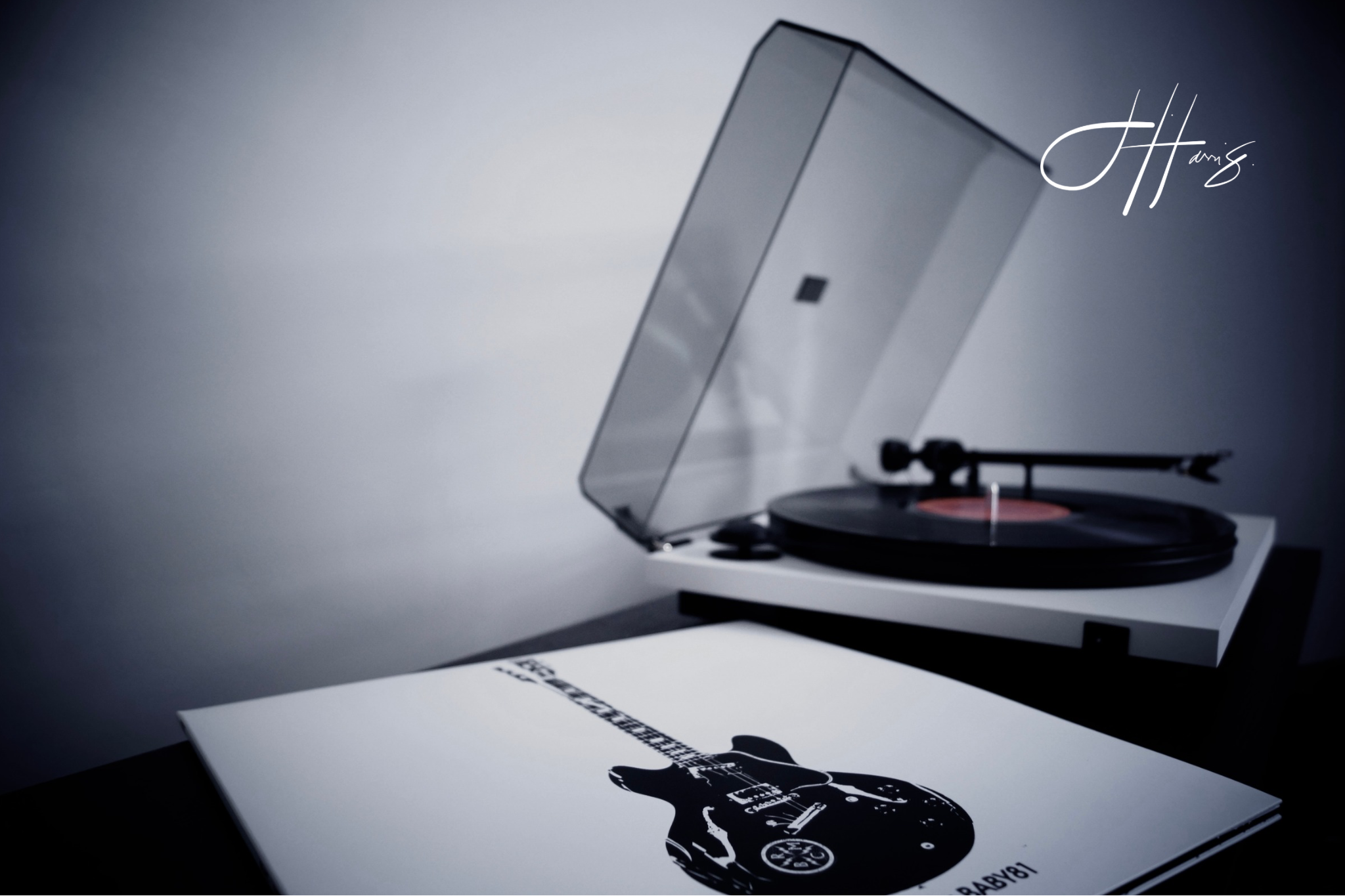
On the sonic side, guitarist-composer James Harris operates with the instincts of a live performer and the precision of a producer. His parts arrive not as rough sketches, but as self-contained environments: guitars with their own internal weather, drum patterns that already feel road-tested, synths and pianos that carry enough atmosphere to suggest a whole skyline. He writes in stems that behave like architectural drawings — harmonic structures, textural choices, dynamic arcs — detailed enough that someone else can build a story on top without having to guess what the building is supposed to look like.
The narrative system sits a continent away. Lyricist and co-composer Pat Villaceran writes from inside Hinabi Privé, a Manila-based cultural haus whose whole operating model is built on arcs: live, multi-sensory nights that use food, music, cocktails, light, and behavioural choreography to tell contained stories about heritage, love, or identity. Her job on VOL II: KURATA is to treat Harris’s stems as data-rich inputs, then design melodies and lyrics that turn those inputs into a three-act emotional model. The result is less “topline over beat” and more “narrative module snapped into a pre-existing sonic chassis.
The workflow reflects that division of labour. A typical cycle starts with Harris exporting stems that already imply mood and direction. Villaceran receives those files, applies her own writing system — lyrics first, then melody, then a local arrangement in her DAW — and returns a new layer. Technology handles the transport layer: a mesh of project folders, versioned files, and shared review links. Each exchange is more like a pull request than a jam: discrete, reviewable, and designed to preserve the integrity of each contribution.
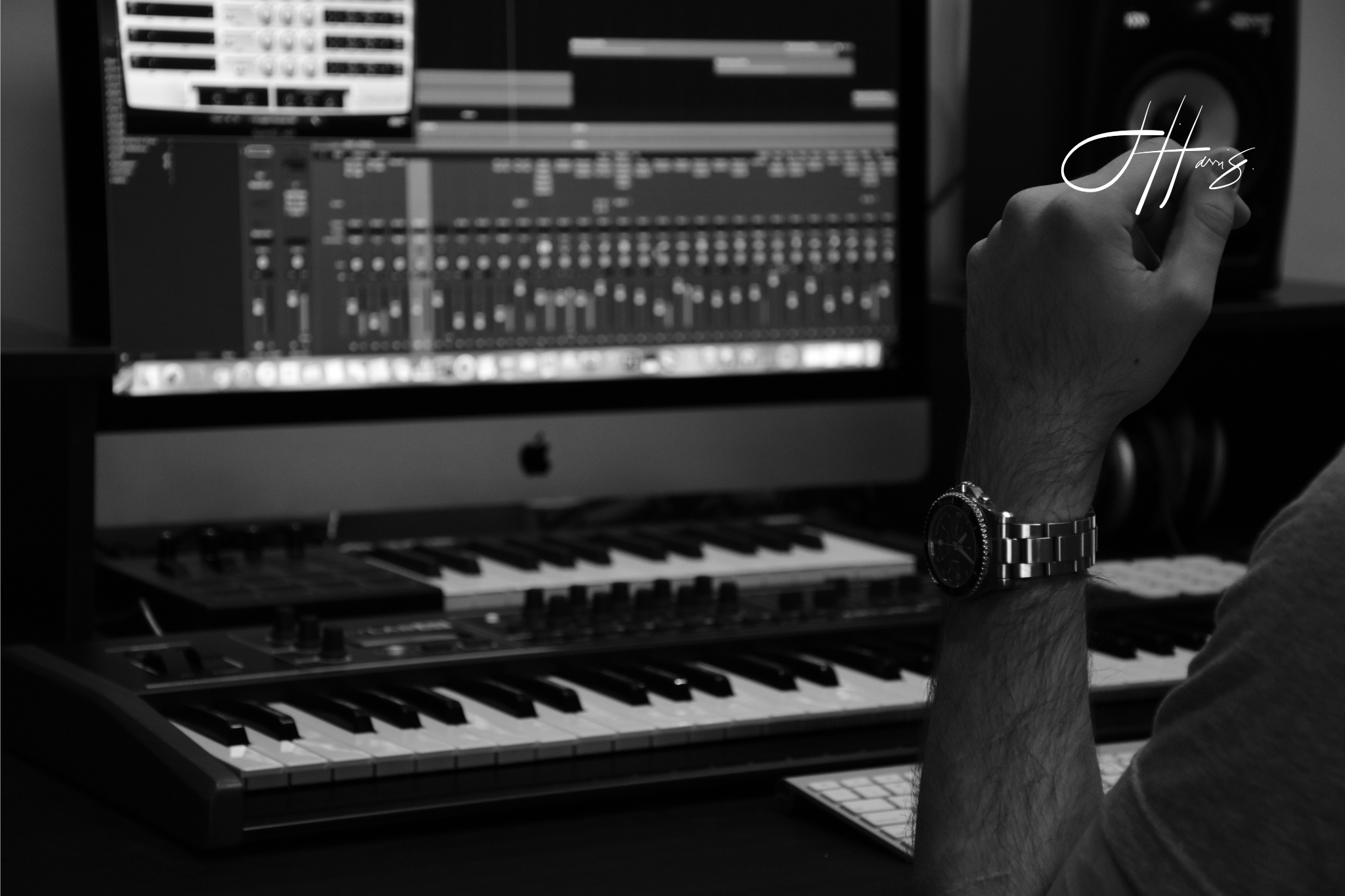
You can hear that in the finished record. Songs don’t sound like they were hashed out in a single rehearsal room; they sound like they’ve survived multiple passes through two different filters. Take “DRAMA,” the album’s most obvious point of entry. Underneath the immediacy of its chorus is a tightly controlled set of production decisions — guitars that lift without overpowering, drums that hit a specific mid-tempo stride, synth beds that widen the stereo field. The lyric and melody system plugs into that chassis and adds a second logic: an arc from tension to partial release that aligns with the broader three-act structure of the album.
Across VOL II: KURATA, that structure is consistent. The first act clusters songs that share certain parameters: harmonic voicings and tonal choices that lean toward instability, lyrical content centred on fracture and first recognition of damage. The second act rebalances those parameters: more decisive drum programming, slightly more assertive guitar presence, text that moves from description to decision. The third act relaxes the density without losing precision — more air in the arrangements, harmonic choices that favour resolution, language that contemplates re-entry into connection rather than defensive withdrawal. It is, in effect, an emotional system diagram rendered in sound.
What keeps the album from feeling clinical is the way those systems were built under constraint. Remote collaboration introduces latency and removes the feedback loop of a shared room. There is no instant reaction to a new chord choice, no spontaneous vocal run triggered by a look across a console. Instead, each party has to encode intent clearly in the material itself. Harris’s stems must be self-explanatory enough that Villaceran can respond without real-time commentary. Her melodies and structural edits must be legible enough that he can expand or refine the production without needing to sit next to her.
That constraint forces a kind of disciplined authorship. Guitars are not simply “cool parts”; they are input variables in a system that also includes future live performance requirements, Hinabi ARC integration, and the overall three-act album model. Lyrics aren’t just diary entries; they are designed to sit at specific stress points in the harmonic framework. The record’s cinematic quality comes less from reverb tails and string patches than from this underlying alignment: two separate design logics, kept intact, consistently pointing at the same emotional coordinates.
Within that architecture, individual tracks behave like case studies. “RENEGADE” demonstrates how the melodic language handles dynamic range, shifting from near-minimal support under verses to full, saturated presence in choruses, while the lyric engine runs a classic power-ballad pattern of admission and defiance. “LUNA” shows the system at higher tempo, revealing how the same components adapt to a more forward-driving feel without breaking the album’s tonal continuity. Elsewhere, pieces like “BUTTERFLIES” and “WOLFIE” highlight the project’s ability to adopt different cinematic sub-modes — spy-thriller tension in one case, near-Disney melodic optimism in another — without losing the core Harris/Villaceran fingerprint.
The Hinabi context adds another layer of technical interest. Because the album is intended to function inside live ARCS — structured nights where sound, food, and environment are choreographed together — every arrangement decision is effectively dual-purpose. A song has to read cleanly on record and remain playable, with limited personnel, in a room where non-musical variables (audience movement, cocktail service, lighting states) are part of the equation. That requirement shows up in the way the mixes leave space for translation: layered enough to feel rich, but not so dependent on studio-only tricks that the material collapses outside the DAW.
All of this makes VOL II: KURATA an unusually revealing listen for anyone interested in how modern records can be engineered across distance without sacrificing identity. It is very clearly the product of two separate expert systems — a guitar-led production language and a narrative/lyric world-building framework — running in parallel and repeatedly syncing. The intimacy people feel when they sit with the album is, in large part, a side effect of that precision. You are hearing two robust creative engines align, not one voice simply echoing another.
In an era where many releases are optimised first for platform behaviour and only secondarily for coherence, VOL II: KURATA stands out as a counterexample. It behaves like an integrated system: inputs, processes, outputs, all tuned for a specific emotional outcome. The dual-city metaphor holds, but underneath the metaphor is a straightforward technical achievement. Two distinct creative infrastructures, built in different places, now share the same grid. The result is an album that feels both expansive and tightly specified — a piece of cinematic pop rock whose emotional pull is inseparable from the engineering that made it possible.
