

The Creative World of James Harris: Guitar, Composition and Production
James Harris doesn’t treat guitar, composition, and production as separate jobs. In his world, they’re three faces of the same discipline: understanding what a song needs and building exactly that – no more, no less.
Guitar: Voice Before Vehicle
Harris’ relationship with the guitar started in the least glamorous way possible: two kids in a school music room, trading ideas and writing joke songs that turned, slowly, into real bands and four full albums. Years of touring the U.K. and Europe hardened that early curiosity into something sharper. On the road, his playing had to survive bad PAs, strange rooms, and unpredictable crowds. The result is a guitar language that is recognisable without being showy.
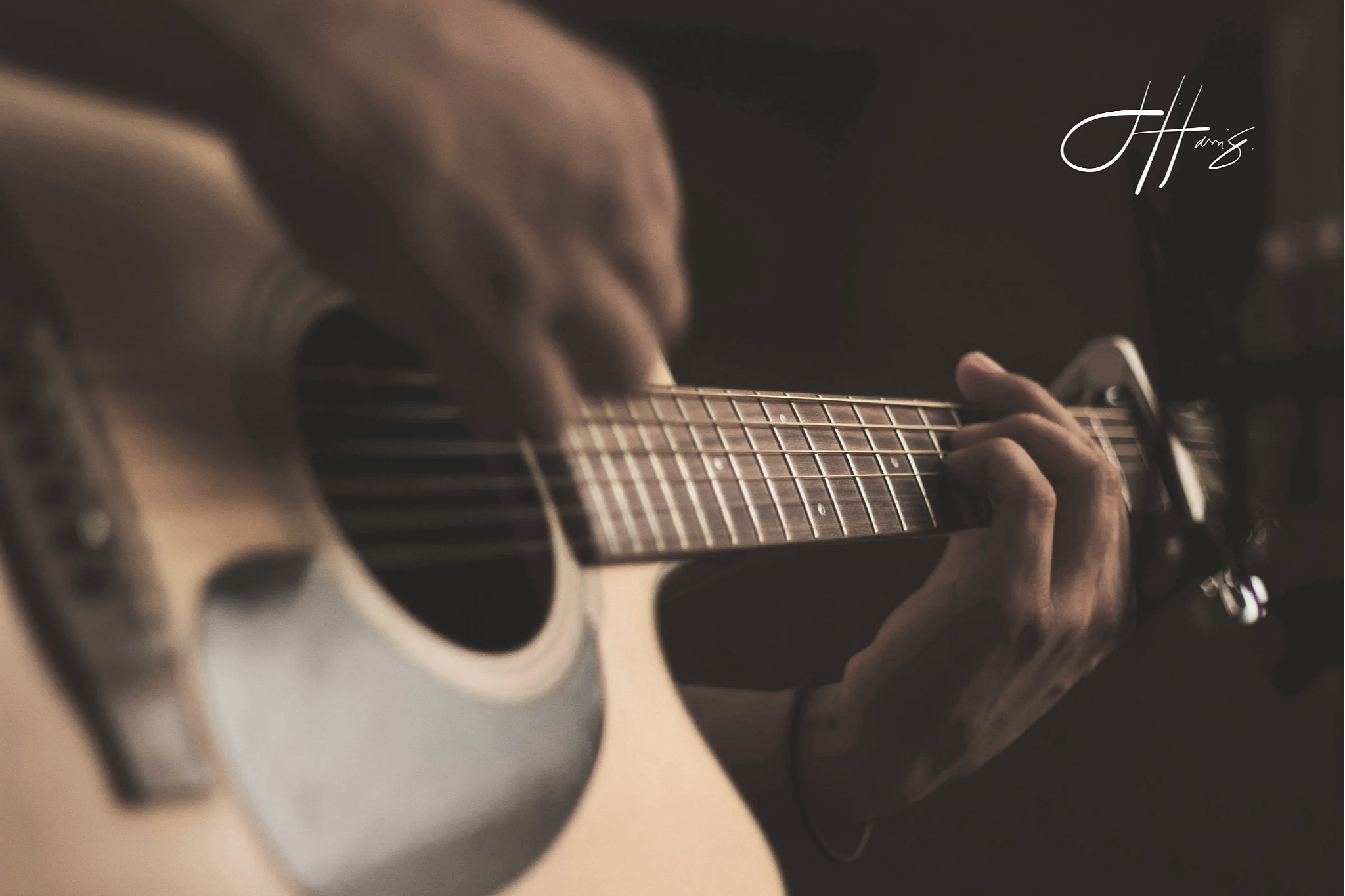
He leans into voicings that carry both harmony and emotion, so the instrument can function as narrator rather than ornament. On VOL II: KURATA, his parts do as much storytelling as the lyrics: tight, tense figures in the early heartbreak tracks, wider and more open chords as the record moves toward resolution. Solos are rare and purposeful; the real virtuosity lies in how well his lines support the arc of a song.
Composition: Albums as Architecture
Harris has spent years studying different styles just to find out which parts belong to him. That compositional restlessness shows up not as genre‑hopping, but as structural confidence. He writes with longform in mind. VOL II: KURATA isn’t arranged like a playlist; it’s sequenced like a three‑act film.
He thinks in arcs: the way motifs can recur without feeling repetitive, where tension should peak, how much space a listener needs between heavy emotional hits. Tracks like “BUTTERFLIES” and “KURATA” behave like opening and thesis chapters; “LUNA,” “KANDATA,” and “RED” are the middle‑act processing; “KALA,” “THAMES,” “WOLFIE,” and “DARLING” are the earned release. That kind of internal architecture doesn’t happen by accident. It comes from a composer who understands form as well as feeling.
Production: Cinematic, Not Bloated
As a producer, Harris prefers clarity over spectacle. His mixes are cinematic, but not overfed: drums with real punch, guitars that occupy clear lanes, synths and strings that widen the frame without muddying it. You can tell he designs with both headphones and live rooms in mind. Every layer sounds like it has argued for the right to exist.
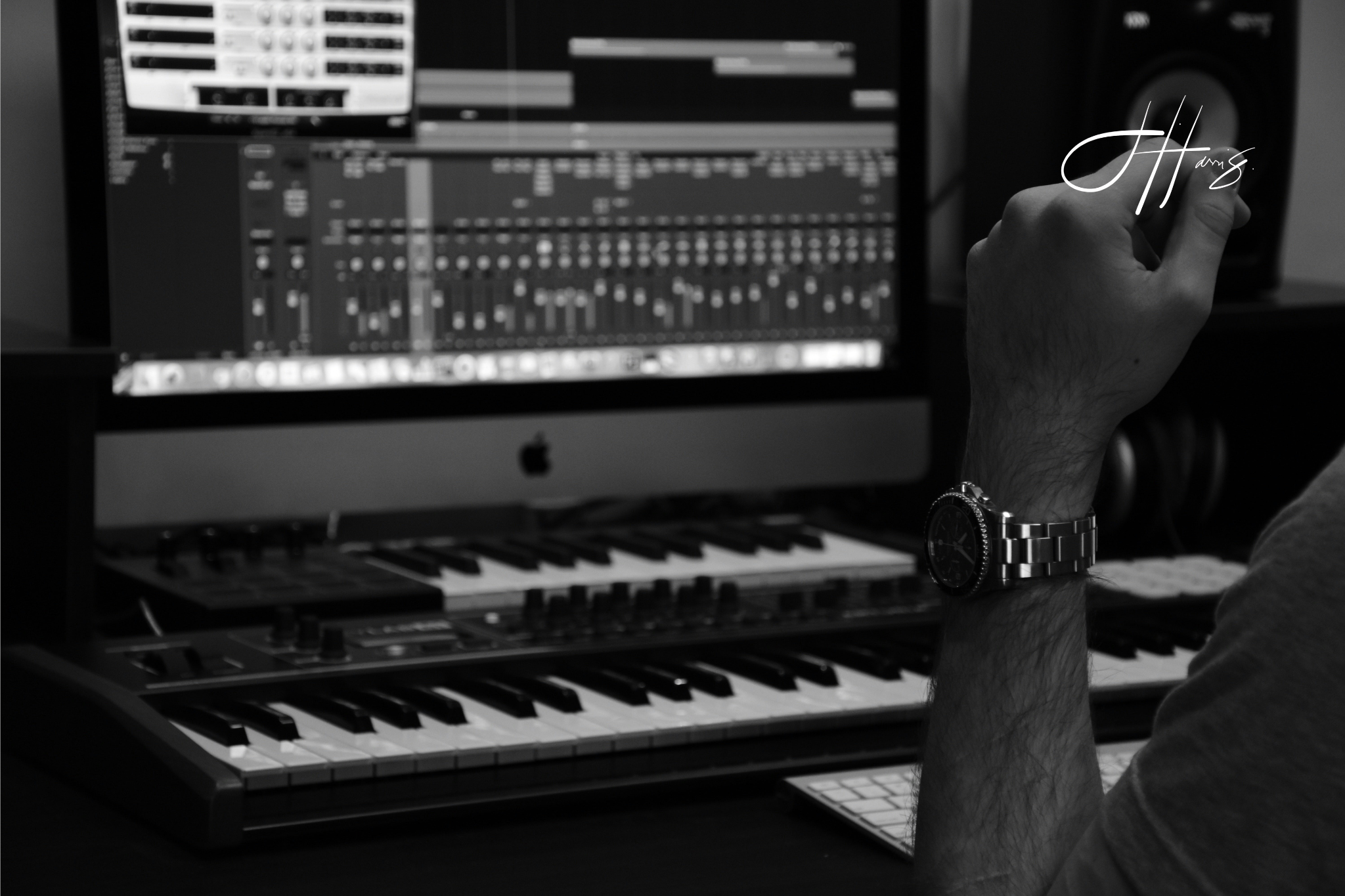
He uses modern DAWs and remote collaboration tools as infrastructure, not as aesthetic. The sessions behind VOL II: KURATA were built across time zones, shared via stems and cloud projects, refined over video calls. Yet nothing about the record feels pieced together. That’s the mark of a producer who has internalised the basics – headroom, space, contrast – enough that the technology disappears behind the decisions.
A Co‑Architect in a Larger Universe
Inside Hinabi Privé, Harris’ creative world plugs into something even larger: a haus where music, food, fashion, and story are designed together as “ARCS.” His guitar, compositions, and productions are not just tracks on platforms; they are structural elements in events, campaigns, and future volumes. He writes knowing the songs will be walked through as much as they will be streamed.
Taken together, those three lanes – guitar, composition, production – form a single through-line: James Harris treats music as a craft that has to hold up everywhere, from a classroom with two battered guitars to a cinematic rock album carrying an entire universe on its back.
