

Why James Harris Is More Than an Emerging Artist
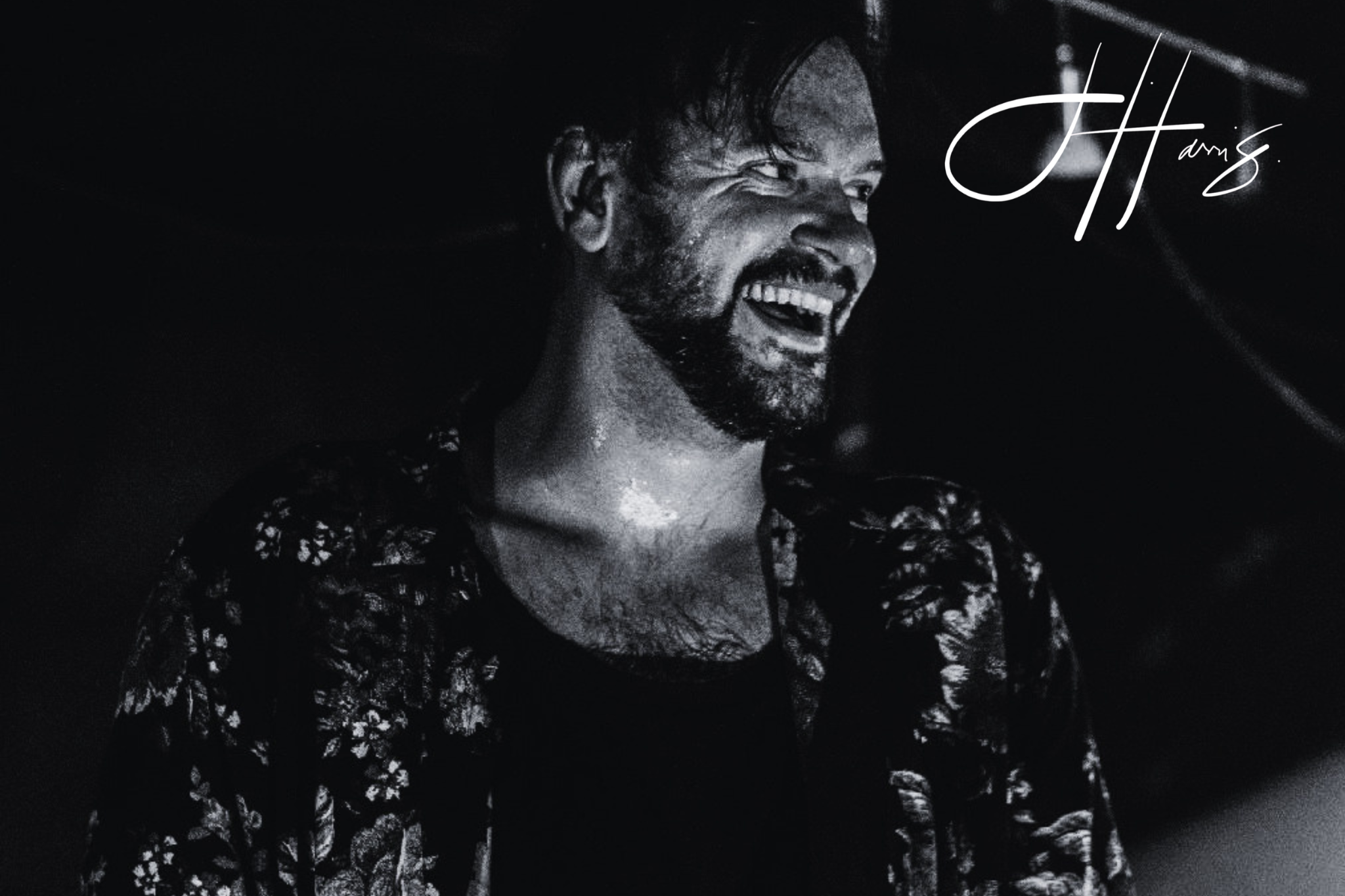
James Harris is not an emerging artist. He just happens to be emerging into more people’s field of view.
Most of the language around new music in 2026 is built for speed: “breakout,” “overnight,” “viral.” It flattens artists into moments, then moves on. Harris doesn’t fit that pattern. His story, and his sound, are built on a much slower timeline: years of study, four albums’ worth of songwriting, tours across the U.K. and Europe, and now a gold medal and a cinematic rock album, VOL II: KURATA, that treats heartbreak like a three‑act film.
A musician built on mileage, not metrics
Before there was any press language or campaign, there were two school kids and two guitars. Harris’ first experiments happened in a classroom with a friend named Alex, trading riffs and writing “funny songs” that, over time, hardened into serious material and two full bands. Those projects led to four albums and the kind of touring that can’t be faked: loading vans, bad monitors, indifferent crowds, and the occasional night when everything catches fire in the right way.
That experience gives him something many “emerging” acts don’t yet have: an internal sense of what works in a room. He writes and produces with the stage in mind – not just whether a hook will stream, but whether a line will cut through live drums, whether a guitar figure will still feel good on the 30th night of a tour. That is craft formed under pressure, not content calibrated for an algorithm.

From bands to volumes: a distinct sonic identity
Over years of playing “every style out there” to find his own sound, Harris has leaned toward a particular kind of clarity. Acoustic music became, for him, the purest test: if a song works stripped back, it will work dressed up. You can hear that philosophy in VOL II: KURATA. Even at its most cinematic – Bond‑coded “BUTTERFLIES,” widescreen title track “KURATA,” the award‑winning single “DRAMA” – the writing holds if you imagine the songs reduced to guitar and voice.

The guitar language is recognisable within seconds: melodic but unsentimental, saturated without turning into mush. Instead of chasing trend sounds, he builds voicings and tones that serve the emotional map of the album. Motifs reappear across songs, reharmonised to match different seasons of the story. That’s why Hinabi Privé calls their records “Volumes” – each one is a chapter in a coherent body of work, not a grab-bag of disconnected singles.
A producer inside a larger cultural haus
What truly moves Harris beyond the “emerging” label is the ecosystem he’s helping to build. Hinabi Privé is not a standard band project; it’s a cultural haus that weaves Filipino heritage, global influences, food, cocktails, space design, and music into live “ARCS” – narrative-led nights where phones are discouraged and presence is the point.
Inside that framework, Harris is not just supplying guitar parts. He is designing the sonic architecture of a world. VOL II: KURATA’s three‑act structure – heartbreak, rebuilding, love chosen on purpose – is mirrored in how ARCS are staged, how cocktails are constructed, how visuals and garments are conceived. His job is to make sure the music can hold that narrative weight in the room as well as on record. That requires a level of intentionality well beyond what the “emerging” tag implies.

Identity before validation
The recent gold medal for his work on “DRAMA” is, in industry terms, a turning point: a public marker that the craft has been seen and acknowledged. For Harris, it’s more of a translation than a transformation. The identity was already there – the years of touring, the studied versatility, the choice to prioritise songs that feel honest over songs built solely to spike a dashboard.
In his own words, he shrugs at algorithms and jokes that co‑composer and Hinabi founder Pat Villaceran is the one who understands them. The line is funny, but it points to something serious: the work comes first. Strategy is there to serve it, not to define it.
Why this matters now
In a market saturated with artists who are “here” because a clip popped, there is value – artistically and commercially – in championing musicians whose work is grounded in long-term practice. James Harris brings:
A proven track record of live performance across multiple territories.
A distinctive, evolving sonic identity anchored in guitar but fluent in cinematic production.
A role as co‑architect of a wider cultural project (Hinabi Privé) that gives the music context, longevity, and multiple revenue pathways.
Recognition from formal bodies (gold medal accolades) that validate, rather than create, his status.
“Emerging” suggests someone who is still figuring out who they are. Harris isn’t. VOL II: KURATA and the growing Hinabi catalogue don’t sound like early drafts; they sound like a mature voice finally getting the distribution, partners, and platforms it deserves.
That’s why the headline is not “meet newcomer James Harris.” It’s “Why James Harris Is More Than an Emerging Artist.” The story here isn’t about potential. It’s about a fully formed musician stepping into wider view – and inviting the industry to catch up.
