

Building a Three-Act Album Across Distance: The Making of VOL II: KURATA
Before VOL II: KURATA was a three-act cinematic pop rock album, it was a series of timestamps.
Folders named by date. Stems quietly uploaded while the other person slept. WhatsApp notifications that arrived mid-meeting or in the dead space between two different lives. Two people — one British guitarist-composer, one Filipino founder-storyteller — building a love story and a world score across continents, one DAW session at a time.
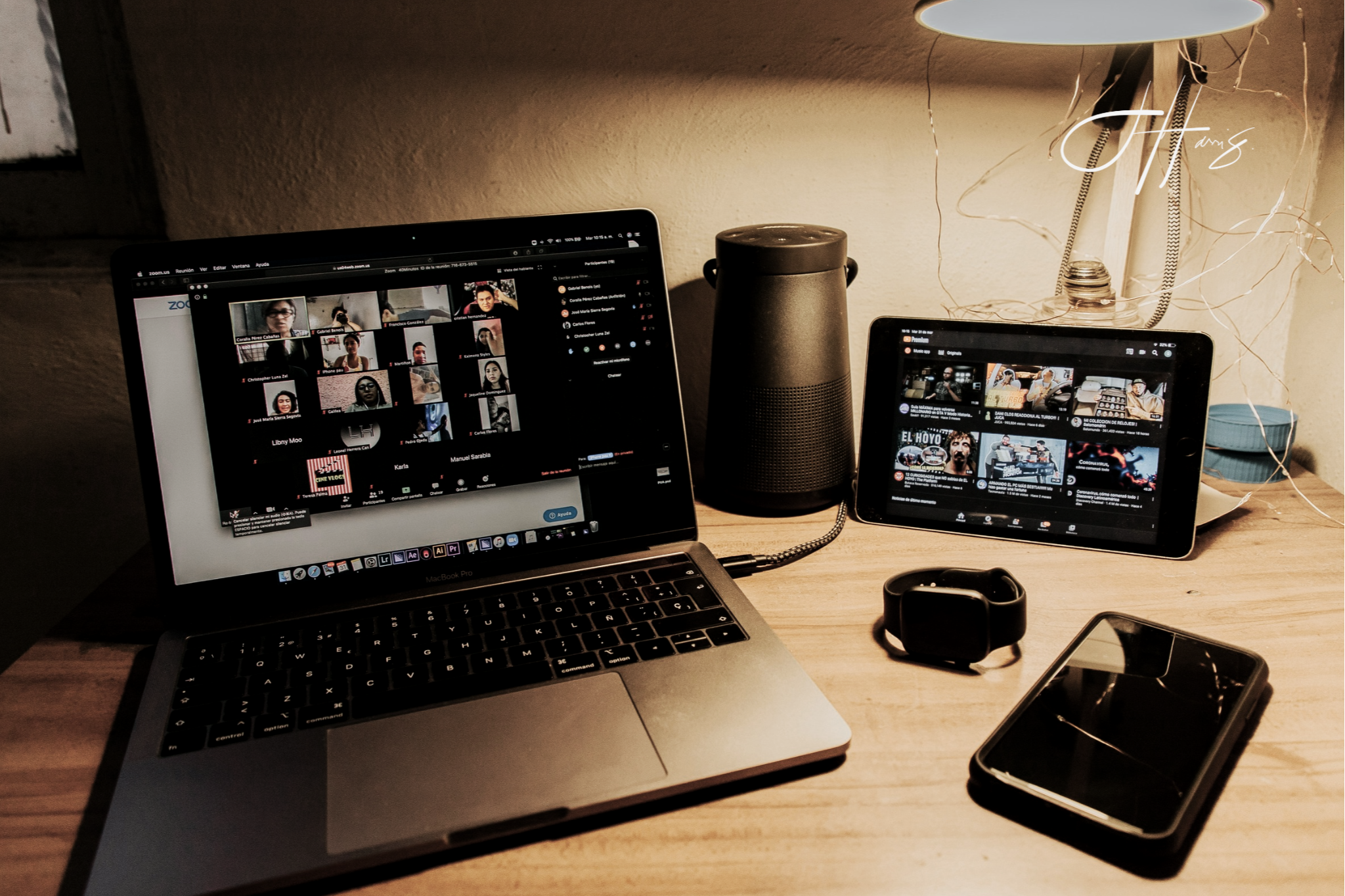
On the surface, this is a familiar modern story: friends sending files back and forth until there’s enough material to call it an album. But under the hood, the making of VOL II: KURATA is a study in what happens when distance isn’t a compromise, it’s the method. When the delay between “send” and “reply” isn’t an obstacle, but the space where a new language gets invented.
“We truly understand that music is its own language,” says Pat Villaceran, founder and world-builder of Hinabi Privé, and co-composer and lyricist for the entire album. “If there’s no real-time feedback, you’re forced to interpret each other through the music itself. That’s where the originality of Volume II: KURATA comes from.”
Two Lanes, Two Continents, One House
Pat and James Harris have been friends for a while. Their creative relationship grew alongside Hinabi Privé itself — a cultural haus that designs live art experiences, or ARCS, in Manila, and treats story as a core material, right alongside sound and light.
While Pat has been busy building and launching those ARCS — capitalised on purpose, each one a narrative arc in its own right — James has been sending over the raw material that would become KURATA’s backbone.

“As I was building the launch of the ARCS here in Manila, we continued to develop the album online,” she says. “I run companies and teams across multiple time zones, so I’m used to collaborating with incredibly talented people purely through technology.”
The twist is in the way they chose to lean into that reality rather than apologise for it.
Pat lives and breathes Hinabi in the Philippines. James operates from his own base — British, steeped in a different musical and cultural tradition. The distance could have flattened their collaboration into something generic. Instead, they decided to let their differences do some of the arranging.
“James and I have very diverse backgrounds,” Pat says. “He’s British, I’m 100% Filipino. But if you allow another person to have their own space, and you respect their feedback, it stops being a barrier. You get to support each other instead of fighting to be heard.”
She’s quick to underline that respect as the non-negotiable.
“If you have that base level of respect,” she says, “you can give each other space to accomplish what you both want out of the sound. I always admire how he builds on top of the base structure of the songs. He finds spaces and snippets where everything is enriched and enhanced, and it becomes even more tactile as a musical experience — even though we’re only talking about two-to-five-minute songs.” The songs stay short. The process does not.
The Back-and-Forth That Built a World
There are no rigid rules carved into the studio wall — partly because there is no shared studio. But there is a pattern.
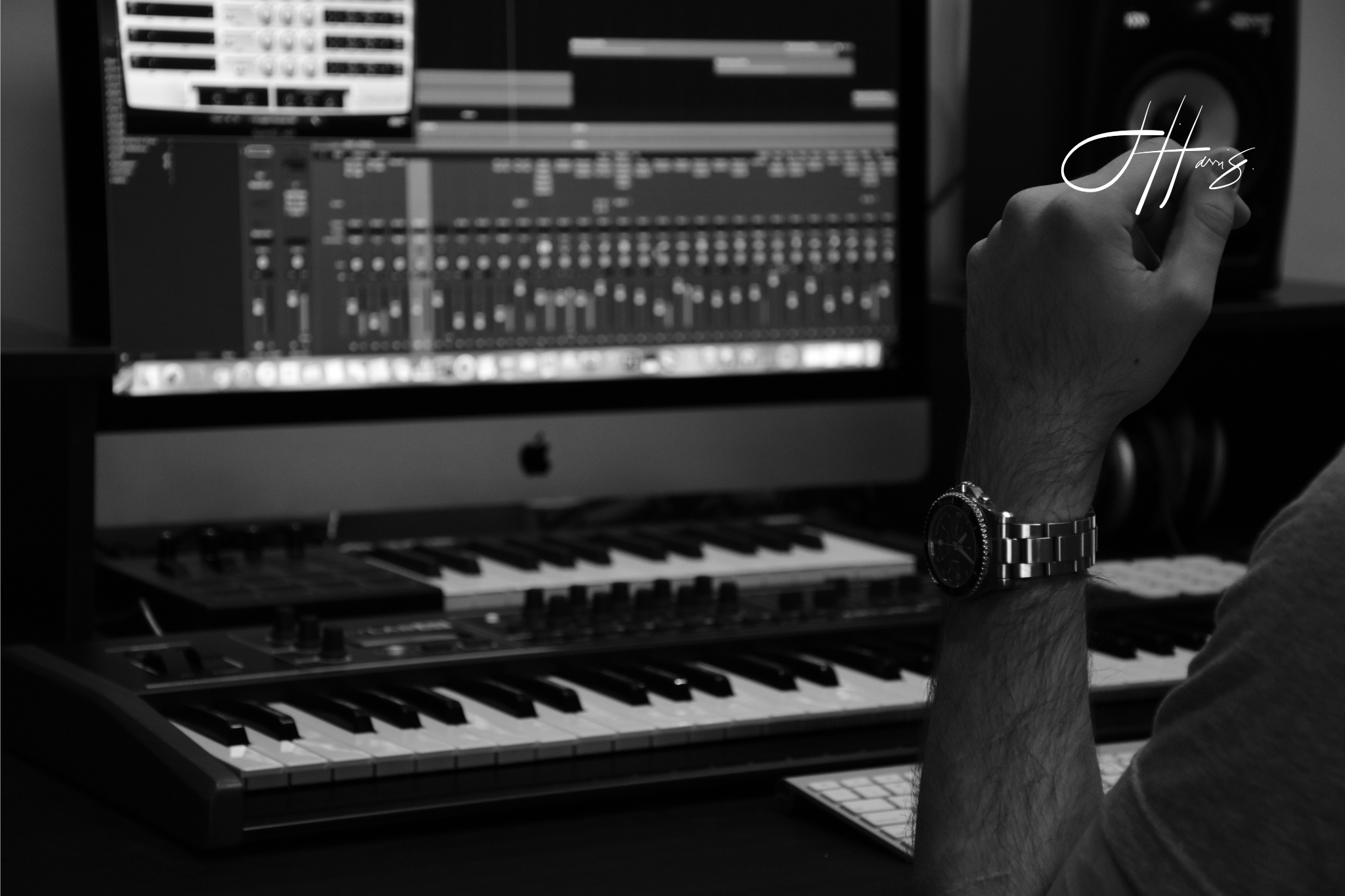
“We always start with his sound,” Pat explains. “We start with his stems. Then I build on that. I always have lyrics ready for me, so from the lyrics I build the melodies, and from the melodies I build my side of the arrangement.”
Her tool of choice is Avid, working inside her DAW. Once the melodic and lyrical architecture is in place, the orchestration begins.
“The beauty of technology is that once you’ve written the notes you want, you can integrate other voices,” she says. “Violin has become an instrumental signature in Volume II. James’s synths and piano are very beautiful on this album. I love the sound of cello — it’s not as integrated here as I originally dreamed, but the drums and beats are very resonant.”
At every stage, the guitar is the anchor. “Of course, James is a guitarist,” she says. “That’s one of the most prominent instruments in this volume. There’s a beautiful balance between the melodies and his guitar.”
Versions pile up. Time zones stretch everything out.
“Honestly, there are no strict rules,” she says. “Maybe just dates on the file names so we can track them. Technology lets us share everything. And then, when it’s time to let others in, we lean on things like Disco to send watermarked streaming versions to peers, labels, executives, family, friends, the internal team. It’s a whole ecosystem.”
The emotional reality of that ecosystem is complicated.
The Emotional Work of Being Apart

On paper, remote collaboration sounds frictionless: send a file, get a file, repeat. In practice, making an album this way means carrying a lot of the emotional weight alone.
“It is quite hard,” Pat admits. “There are challenges, for sure. When you’re in a band room, you get to practise the entire song while you’re hearing the drums, the live guitar, everything around you. You can feel each other in real time.”
When she rehearses KURATA material, she often does it with backing tracks and imagination.
“For me, as I’m practising singing the songs, it’s challenging when you don’t have the live guitar in front of you,” she says. “You have to depend on the backing sound when you practise. You’re building the performance around something that’s not physically in the room yet.”
For James, there are parallel frictions. In another interview, he’s talked about building distinct sound palettes for the three arcs of the album, each one meant to feel like its own season. Without a shared room, those seasons had to be felt individually first, then compared later.
The distance affects the songs in less obvious ways, too.
Pat recalls an early arrangement of “DRAMA,” the first song they built for the record, as one of the clearest examples.
“We really started Volume II with ‘DRAMA,’” she says. “And the development of ‘DRAMA’ is still ongoing. We’re still trying to find the perfect picture for it. There was one version I arranged that was more orchestral, very cinematic. You could literally feel the chaos and anger in your bones — a lot of cello, a lot of low-end, my favourite instruments.”
She laughs, acknowledging that the world may one day hear that alternate timeline.
“Maybe in the future we’ll develop an orchestral version of the entire album,” she says. “That would be so beautiful. For now, we’re sticking with the studio version of ‘DRAMA’ that makes sense inside the three arcs.”
The push and pull between those versions didn’t happen in a single late-night session. It unfolded across weeks and timestamps. That’s what distance does: it stretches decisions out long enough that instinct has to be articulated, not just felt.
Seasons, Not Spreadsheets: How the Three Acts Emerged
One of the most striking aspects of VOL II: KURATA is its three-act structure — three ARCS that correspond loosely to heartbreak, rebuilding, and rediscovered love. You’d be forgiven for assuming that the team mapped this out on a whiteboard before writing a single note.
The truth is messier.
“We didn’t sit down and say, ‘This will be three arcs,’” Pat says. “Based on the seasons we had while building the album together, they emerged.”
She means “seasons” almost literally. There were months where the songs came out funky and upbeat, months where everything tilted somber, months that felt “beautifully mellowed,” in her words. Each cluster carried its own emotional weather. When they zoomed out at the end, the pattern was impossible to ignore.
“That’s why it’s three arcs,” she says. “We wrote through a series of seasons. Our creative lenses are different, but they overlap in how we move through time.”
Act I is the storm aftermath: heartache and heartbreak, the first honest look at where things cracked. Act II is the rebuilding: the strength of reconstructing your own heart, sometimes with shaking hands. Act III is the light after the storm: rediscovering love, not as a naive repetition of Act I, but as something wiser and more generous.
The decisions about where songs sit inside that structure weren’t always made on mood boards. Sometimes they were made on instinct.
“KURATA” itself — the title track — was one of the most challenging to place and to finish.
“It was one of the most challenging songs, not only from a melody and vocal perspective, but to build as a whole,” Pat says. “I started with a very simplified base song structure. But I kept describing and giving James references: it needs this kind of sound, this kind of ethnic ping, this shape. We went back and forth a lot.”
She mentions “WOLFIE” as another example of the microscopic attention that goes into small moments.
“There’s a middle part in ‘WOLFIE’ with a three-to-five-second space,” she says. “I told him to ‘tie it with a bow.’ That’s literally how I described it. Those are our creative lenses. When it comes to really building the sound, that’s James. The lyrics, he doesn’t touch — that’s mine. The melodies are mine. The base level of the song structure comes from me too. But the enhancement, and overall production, that’s James Harris’s signature sound.”
Two lanes. One road.
DRAMA: The Long Road of a Three-Minute Song
If KURATA is the song that turns the key for listeners, “DRAMA” was the key for the creators.
“For this Volume II — it’s the second volume for Hinabi Privé — we really started with the song ‘DRAMA,’” Pat says. “We’ve written albums for other ARCS, we’ve written original songs for previous events. But ‘DRAMA’ was the starting point for this particular world.”
The irony is that the song that starts everything for the listener is the one that has refused to fully settle down for the creators.
“‘DRAMA’ is still evolving,” she says. “We’re still trying to find the perfect picture. That’s the thing people don’t always see: even that three-minute song takes so much back and forth. Time zone differences, life, everything.”
It’s a reminder that, for all the talk about digital efficiency, some things stubbornly remain analog in spirit. Emotional decisions can’t be sped up with fibre.

Distance as a Creative Constraint
For all the friction, Pat is convinced that the lack of real-time co-presence is part of what makes KURATA sound like itself.
“I asked James at one point, ‘Is there an essence you’re missing by not recording in the same room?’” she recalls. “In person, you can jam and get instant feedback. You can react to each other’s faces, each other’s bodies. But with this, there’s no real-time feedback. We’re going at it back and forth.”
She pauses, weighing the cost and the payoff.
“That’s where the crux and the originality of Volume II comes from,” she says. “Because there’s no instant reaction, we have to interpret each other’s sounds purely through the music. We don’t get to talk over the guitar. We have to listen to it.”
The cultural differences become assets in that context. James hears Pat’s melodic and lyrical structures through his own sensibilities. Pat hears his harmonic and textural choices through hers. No one gets to default to the lazy option of saying, “You know, like that one song,” and hoping the other person fills in the gaps.
“We’re forced to be specific,” she says. “I describe the shapes of sounds I want. I say things like, ‘Tie it with a bow.’ I talk about ethnic pings. He translates that into actual music. That translation layer is where the magic lives.
Music as the Only Language That Matters
If there is a single idea Pat wants people to carry out of the making-of story, it’s this: KURATA isn’t just an example of remote collaboration. It’s an argument about what music is for.
“The main thing I want people to take away from how we built this album is the fact that music is its own language,” she says. “It should transcend native languages. It should transcend cultural barriers.”
She doesn’t say that lightly. Hinabi Privé’s entire mission is about weaving Filipino heritage, global influences, and future-facing narratives into spaces where people actually live. VOL II: KURATA is one of the most concentrated forms of that work.phantomelectricghost+2
“I believe music is a universal language,” she says. “That’s one of the biggest messages of the album — maybe the only message when it comes to describing how we built these songs. Music can unify people across diversity, across ages, across everything.”
Building a three-act album across distance — across cultures, time zones, and hardware setups — is one way of proving that. The songs themselves are another.
For the listener, the latency disappears. What’s left is a record that feels improbably seamless for something stitched together over WhatsApp and Google Drive. A record where each arc lands as if it were conceived in a single room at a single time, even though it wasn’t.
That’s the quiet miracle at the heart of VOL II: KURATA. The distance between the people who made it is real. You can count the miles. But once the music starts playing, the only distance that matters is the one between where you are now, and the person you might become if you let the story finish.
