

VOL II KURATA Proves Concept Albums Are Not Dead, They Just Moved to the Hinabi Universe

VOL II: KURATA doesn’t arrive holding a placard that says “concept album.” It doesn’t need to. It just behaves like one, on its own terms, inside a universe that was already thinking in arcs long before anyone hit record.
The joke in the title is that concept albums aren’t dead; they’ve simply migrated into places like Hinabi Privé, where story, space, and sound are treated as one continuous fabric. The honesty in the title is that Pat Villaceran — founder and world-builder of Hinabi Privé, and co-composer and lyricist for the album — isn’t especially interested in winning a technical argument about labels.
“I don’t even know if this is the correct technical term,” she admits. “I’m not sure if KURATA is a ‘concept album’ in the strict sense. I just know we built it as a whole story. I want people to interpret it as it is.”
What “it is,” in practice, looks an awful lot like the kind of ambitious, through-line-driven records that used to anchor entire eras for artists: narrative continuity, emotional progression, recurring textures and images, all arranged with the assumption that someone will actually listen from start to finish.
The difference is where — and how — a record like this now lives.
Concept Albums, but Make It Hinabi
Traditional concept albums — think the grand rock epics, the operatic narratives, the skits-and-all hip-hop sagas — often came with a kind of heaviness. They asked listeners to buy into a whole mythology, sometimes at the expense of the simple pleasure of a song. The format never really died; it just drifted away from the center of mainstream attention, nudged aside by playlists, singles, and the gamification of attention.
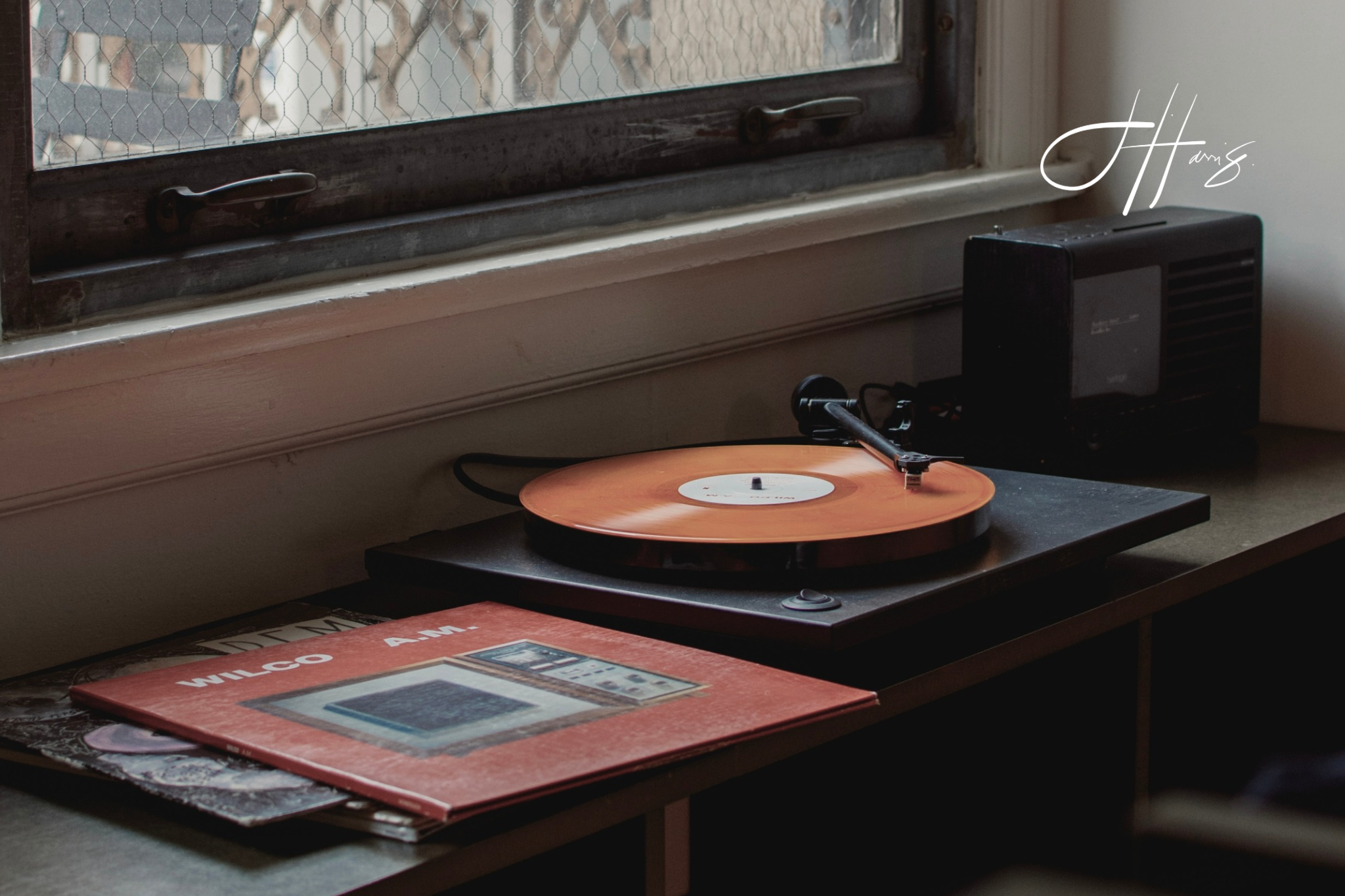
Pat isn’t interested in nostalgia for nostalgia’s sake. She’s more interested in what survives.
“I’d like to believe there are still very powerful musicians out there building albums from within concepts,” she says. “Maybe they’re independent. Maybe they’re not on everybody’s algorithm. But they exist.”
KURATA is her contribution to that lineage, even if she’s hesitant to stamp it with a genre tag.
What makes it feel like a concept record, even if no one calls it that, is the way its pieces insist on belonging to one another. The three ARCS — emotional seasons that move from heartache to rebuilding to rediscovered love — are not interchangeable. The songs are sequenced with a clear sense of before and after. Motifs recur. Emotional questions raised in one act don’t get answered until later.
Just as importantly, KURATA doesn’t exist in a vacuum. It lives inside the Hinabi universe, where albums are not just collections of tracks, but one branch of a larger story organism that includes live ARCS, food, cocktails, clothes, and the behavioural choreography of how people inhabit a room.
“At Hinabi, we think holistically,” Pat says. “Even when we create sounds, we’re thinking, ‘How will this feel live? What will be the challenges when we perform this in a room?’ We’re producing with the live experience in mind, even though it’s just the two of us on the production side.”
When your universe is already structured like a concept — arcs of meaning built into nights, menus, and memberships — an album like KURATA isn’t a gimmick. It’s a logical chapter.
The Guitarist as World Engine

One of the reasons VOL II: KURATA feels different from classic concept records is the way its authorship is wired.
“In most bands, the lead singer writes, or someone close to them does,” Pat says. “Then you get the guitar and other instruments layered on top. For us, it’s almost upside down.”
The starting gun for most songs on KURATA is James Harris’s sound.
“I admire so much the way his unique sound comes about,” she says. “You hear it and you know it’s James Harris. I haven’t heard anything quite like it in so long. He makes these songs, and they’re so beautiful. Most of the time I even feel like it’s his sound, and I’m putting words on it to complement what he writes.”
She’s careful not to erase her own contribution — “my role is absolutely 50/50, I know exactly what I’m building into this album” — but she keeps coming back to James’s tone as the founding myth.
“What sets this apart is that the sound truly comes from his mind, his artistry, his creativity,” she says. “My job is to meet that sound with lyrics and melody that honour where it’s coming from.”
If traditional concept records sometimes feel like they started with a script and then hunted for the score, KURATA often feels like it started with a score and then discovered its script living inside it.
Anti-Viral by Design

For all its structure and intent, VOL II: KURATA is as much a critique of the current music economy as it is an entry into it.
“I’ve said this in interviews,” Pat notes. “We have to remind artists that it’s not just about the TikTok trends and the hooks and the lines and the strategies. It’s not just about how young you are, how you have to appear as an artist, whether you need to wear revealing clothes, or what you have to be to be considered ‘relevant.’”
Her tone isn’t scolding. It’s worried.
“I feel like we’re going to lose a lot of great music and great artistry if we only push musicians and singers and songwriters toward what’s trending,” she says. “If all we tell them is, ‘Shorter hooks, faster content,’ we shouldn’t be surprised when nobody has the time to build a real body of work.”
KURATA is, in that sense, deliberately antiviral. It does not optimise itself for 15-second clips. Its songs are designed to stand inside a narrative arc, not to spike an engagement chart.
“We’re saying: make your art first,” Pat explains. “Make your music first. Then think about distribution and strategy. James and I are more experienced. He has touring experience all over the U.K. and Europe, he’s played in L.A. and Hollywood with his bands. I’ve built companies and live experiences. We both know the game. We’re just choosing to play it differently.”
That doesn’t mean ignoring reality. It means choosing what to protect.
Concept, Grounded in the Real
The conceptual spine of VOL II: KURATA — those three ARCS, that whole-hearted journey — is anchored by a surprisingly practical question: Can we actually perform this?
“As producers of the album, it’s just James and me,” Pat says. “So even when we’re layering sounds, we’re asking, ‘Can we make sure this is something we can play live?’”
That’s an unusual constraint for a record that could easily have gone full maximalist. She remembers the early version of “DRAMA,” her own orchestral-leaning arrangement full of cello and bass and cinematic fury, as an example of how far they could have gone.
“It was very powerful, extremely cinematic,” she says. “You could feel the chaos and anger in your bones. But then we had to ask: for Volume II, does the studio version that fits the three arcs need to be that big? Or do we save that for another context — an orchestral version in the future?”
Concept in the Hinabi universe isn’t about endless abstraction. It’s about usefulness. An album is not a closed artwork in a gallery. It’s a tool the haus needs to work in rooms.
That’s why Pat spends as much time thinking about logistics as she does about leitmotifs. Volume II has to talk to Volume I. Future volumes — and the forthcoming vinyl — have to fit into the same shelf of someone’s life.
“For someone who is listening to a whole album for the first time in a while,” she says, “I hope KURATA inspires them to start listening to full records again. The full record of it all. We have a vinyl coming. I want people to drop the needle and stay.”
The Hinabi Universe as Concept Engine

When Pat says that concept albums “moved to the Hinabi universe,” she isn’t claiming a monopoly on ambition. She’s pointing out that concept work is now often done by ecosystems, not just individuals.
Hinabi is polymathic by design. Pat runs a nutrition, wellness, and food company alongside the haus. James runs his own events company. Together, they fold those separate competencies into a shared space where an album doesn’t just have songs; it has rooms, flavours, garments, and communities that mirror its themes.
“Our approach is polymathic,” she says. “We’re integrating. That’s how it started. Themes and emotional continuities are built in across everything we do.”
In that context, VOL II: KURATA is just one more arc — albeit a particularly concentrated one. Its story about love, heartbreak, rebuilding, and rediscovery is meant to be felt in an ARC night as much as it is in your headphones. Its textures are designed to match the look and feel of JHARRISGEAR pieces on musicians’ bodies. Its pacing is informed by the rhythm of live sets, not just the demands of the skip button.
Concept albums didn’t die. They just started needing a bigger canvas.
Beyond the Tag
In the end, Pat is content to let other people decide what to call VOL II: KURATA.
“If people want to call it a concept album, that’s okay,” she says. “If they don’t, that’s okay too. I just want them to feel the continuity, the way the songs are placed to have their own flow, and the way it all fits into a universe.”
What she’s less neutral about is the underlying belief that makes such a project possible.
“Music is a language,” she says. “It’s one of the only truly universal languages we have. It should transcend native language. It should transcend culture. That’s the message I want people to hear when they think about how we built this album.”
Concept, in that frame, isn’t a marketing term. It’s a promise: that if you give a record like VOL II: KURATA the time it asks for, it will repay you with something more than a hook. It will give you a story big enough to live in for a while.
That’s not death. That’s survival. And for now, a lot of that survival is happening in places like Hinabi — in houses where albums are still treated like worlds, not just content drops.
